
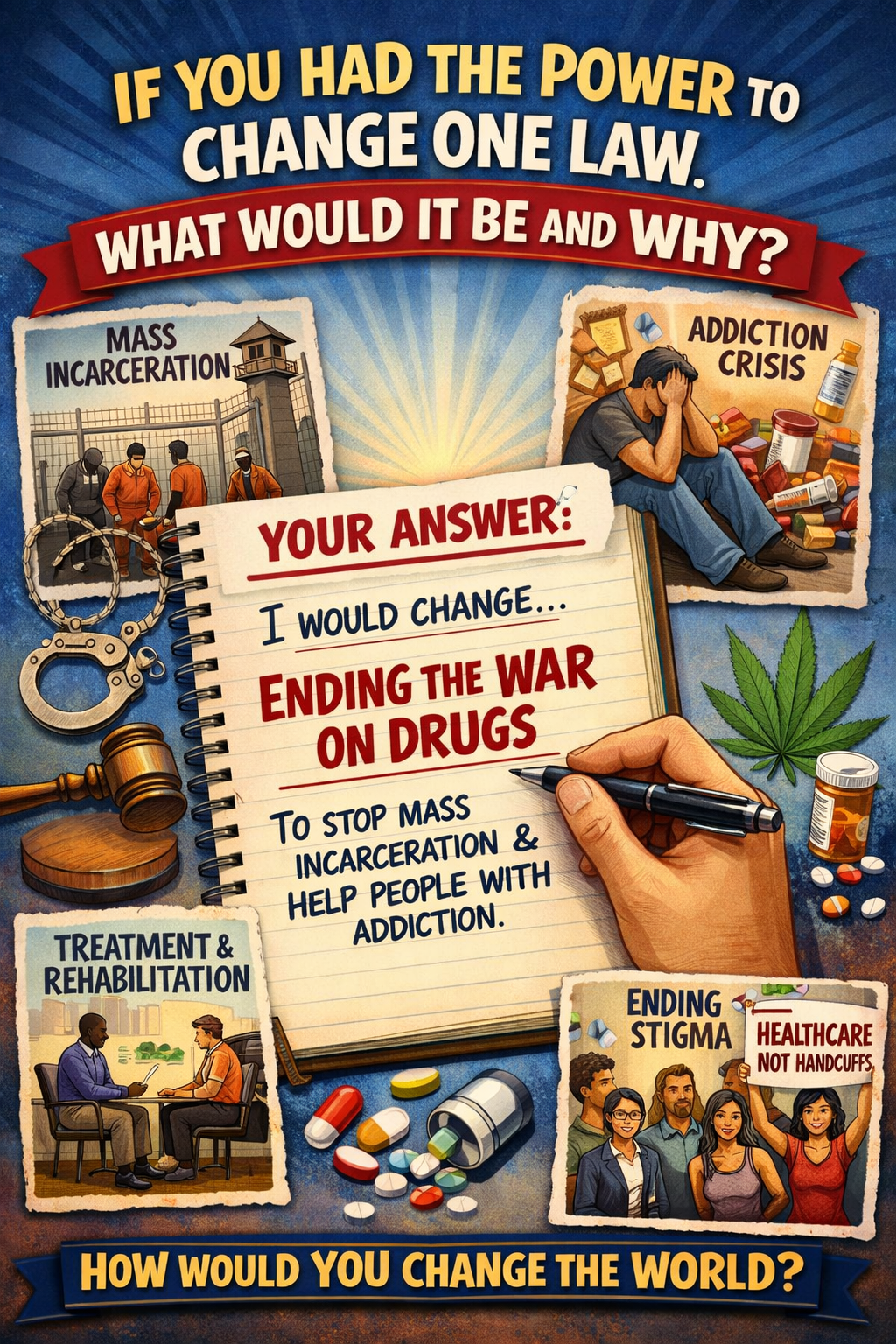
If you had the power to change one law, what would it be and why?
It’s a question that gets people talking at dinner and in policy circles. If you could rewrite just one law, what would it be? Your answer shows what you value, what you think is wrong with things now, and what you hope society could be.

The Weight of Choosing One
The difficulty lies not in finding a law worth changing, but in choosing just one. Should it be something that affects millions directly—healthcare access, minimum wage, environmental protections? Or something less visible but deeply important—criminal justice procedures, housing policy, educational funding? Everyone’s answer would reflect their lived experience and priorities.
A Case for Criminal Justice Reform
If you ask a lot of smart people, no matter their politics, they’d probably say the criminal justice system needs some serious changes. I’d specifically look at mandatory minimum sentencing laws.
Here’s why: these laws, well-intentioned when created, have produced outcomes that don’t match their original purpose. They remove judicial discretion, creating situations where a judge—who has heard a case, understood context, and weighed evidence—must impose sentences they sometimes believe are disproportionate. This affects lives profoundly. A young person with no prior record receives the same 10-year mandatory minimum as a repeat offender because both were convicted of the same drug charge.
The repercussions extend broadly: families are divided, chances for rehabilitation are diminished, and our incarceration rates persist as some of the highest globally, even as crime rates decrease. The substantial financial expenditure—exceeding $80 billion each year on incarceration—could instead be allocated to prevention, treatment, and reintegration initiatives.
Why This Matters Across Divides
What makes this change potentially valuable is that it addresses concerns from different perspectives. Those focused on justice reform see it as humanitarian. Those concerned about government spending see it as wasteful. Fiscal conservatives recognize the massive budget implications. And communities affected by crime—including those most harmed by it—increasingly support approaches that actually reduce recidivism rather than simply punishing it.
Changing this wouldn’t get rid of serious consequences for serious crimes. It would mean letting judges make their own calls, allowing for fairness, and making space for rehabilitation when it’s effective.
The Bigger Picture
Of course, this is just one way to look at it. Someone else might strongly argue for changing copyright law to help artists and innovators, or education law to improve school funding, or healthcare law to improve access. These are all valid answers to this question.
It’s not really about picking one law, but more about understanding why our systems are set up the way they are, where they mess up, and how we can make them better. It’s about thinking through the results, the pros and cons, and how it all affects real people.


Leave a Reply