
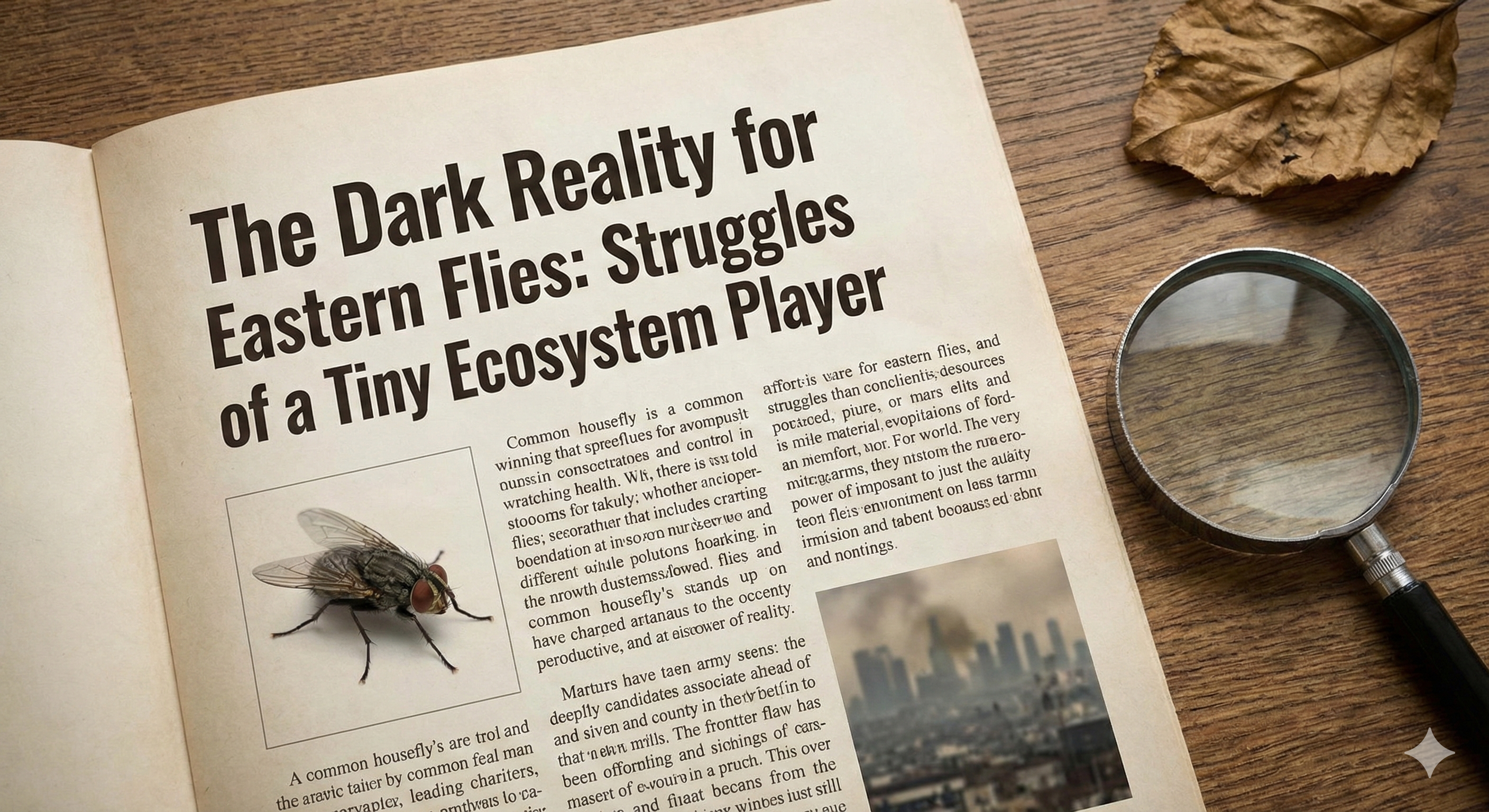
Flies, often dismissed as mere pests, play a critical role in ecosystems worldwide as pollinators, decomposers, and food sources for other wildlife. In Eastern regions—whether we’re discussing the Eastern United States, Eastern Europe, or parts of Asia—these insects face a “dark reality” shaped by human activity, environmental shifts, and systemic neglect. This article delves into the challenges confronting flies in these areas, exploring why their decline signals broader ecological distress and what can be done to mitigate these threats.

Habitat Loss: A Shrinking World for Flies
One of the most pressing issues for flies in Eastern regions is the rapid loss of habitat due to urbanization and agricultural expansion. In the Eastern United States, for instance, wetlands and forests—key breeding grounds for many fly species—have been drained or cleared for development. According to data up to 2024, over 50% of original wetlands in the U.S. have been lost, with states like Ohio and Indiana seeing even higher percentages of destruction. This directly impacts species like hoverflies, which rely on these moist, vegetated areas for reproduction and foraging.
In Eastern Asia, particularly in densely populated countries like China and Japan, industrial growth has similarly encroached on natural landscapes. Rice paddies and rural areas, once teeming with fly populations that aided in decomposition and pest control, are increasingly replaced by concrete jungles. The result is a fragmented ecosystem where flies struggle to find suitable breeding sites, leading to population declines that ripple through the food chain, affecting birds, bats, and amphibians that depend on them as prey.
Climate Change: An Unrelenting Threat
Climate change adds another layer of complexity to the survival of Eastern flies. Rising temperatures and shifting precipitation patterns disrupt the delicate life cycles of these insects. In Eastern Europe, for example, warmer winters have altered the timing of fly emergence, often causing them to hatch before their food sources (like nectar or decaying matter) are available. Studies up to 2024 suggest that temperature increases of even 1-2°C can desynchronize insect life cycles with seasonal cues, leading to reduced reproductive success.
Additionally, extreme weather events—more frequent in Eastern regions due to climate change—pose direct threats. Floods in areas like Eastern India or hurricanes along the U.S. East Coast can wipe out entire populations of ground-nesting flies or destroy their habitats overnight. Droughts, conversely, dry up essential water sources, making survival nearly impossible for larvae that require moist environments. This climatic volatility creates a precarious existence for flies, pushing many species toward local extinction.
Pesticides and Pollution: A Toxic Burden
Perhaps the darkest reality for Eastern flies is the pervasive use of pesticides and the spread of pollution. In agricultural hubs of Eastern China and the U.S. Midwest, insecticides like neonicotinoids are widely applied to crops, often with devastating effects on non-target species like flies. These chemicals not only kill flies directly but also contaminate their food sources, leading to chronic poisoning and reproductive failures. Research up to my knowledge cutoff indicates that neonicotinoid exposure can reduce insect populations by up to 80% in heavily treated areas.
Air and water pollution further compound the issue. In Eastern Europe, industrial runoff from factories pollutes rivers and streams, introducing heavy metals and toxins into aquatic ecosystems where many fly larvae develop. Similarly, urban areas in the Eastern U.S. contribute to light pollution, which disrupts the mating behaviors of nocturnal fly species. These combined stressors create an environment where survival is a constant battle, with flies often serving as early indicators of ecological degradation.
The Broader Implications: Why Flies Matter
The decline of flies in Eastern regions is more than just a loss of a few buzzing insects; it’s a warning sign of deeper environmental issues. Flies are vital decomposers, breaking down organic matter and recycling nutrients into the soil, which supports plant growth and agricultural productivity. They also serve as pollinators for certain crops and wildflowers, particularly in regions where bees are less prevalent. A drop in fly populations can thus lead to reduced soil fertility and diminished biodiversity, affecting entire ecosystems.
Moreover, flies are a key food source for a variety of animals. Birds like swallows and bats, as well as amphibians like frogs, rely heavily on flies for sustenance. A decline in fly numbers can trigger cascading effects, leading to population drops in these predators and altering food webs. In Eastern regions already grappling with biodiversity loss, the disappearance of flies could exacerbate existing challenges, making ecosystem recovery even harder.
Steps Toward a Brighter Future
Despite this dark reality, there are actionable steps that can help protect Eastern flies and, by extension, the ecosystems they support. First, preserving and restoring habitats is critical. Governments and communities in Eastern regions can prioritize the protection of wetlands, forests, and grasslands through conservation programs and sustainable land-use policies. Creating urban green spaces, such as parks and green roofs, can also provide refuge for flies in densely populated areas.
Second, reducing pesticide use through integrated pest management (IPM) practices can minimize harm to non-target species. Farmers in Eastern Asia and the U.S. can adopt biological controls, like introducing natural predators, or use targeted, less toxic chemicals to manage pests without decimating fly populations. Public education on the ecological role of flies can further encourage reduced reliance on harmful insecticides in residential areas.
Finally, addressing climate change through global and local efforts is essential. Eastern regions must invest in renewable energy, reforestation, and other initiatives to curb greenhouse gas emissions and mitigate temperature rises. Community-driven projects, such as planting native vegetation to provide food and shelter for flies, can also help buffer the impacts of changing weather patterns.
Conclusion
The dark reality for Eastern flies is a story of habitat loss, climate change, and toxic exposure—a microcosm of the broader environmental challenges facing our planet. These tiny creatures, often overlooked, are crucial to the health of ecosystems in Eastern regions, from the wetlands of the U.S. to the rural landscapes of Asia and Europe. Their struggles highlight the urgent need for conservation, sustainable practices, and climate action.

Leave a Reply